
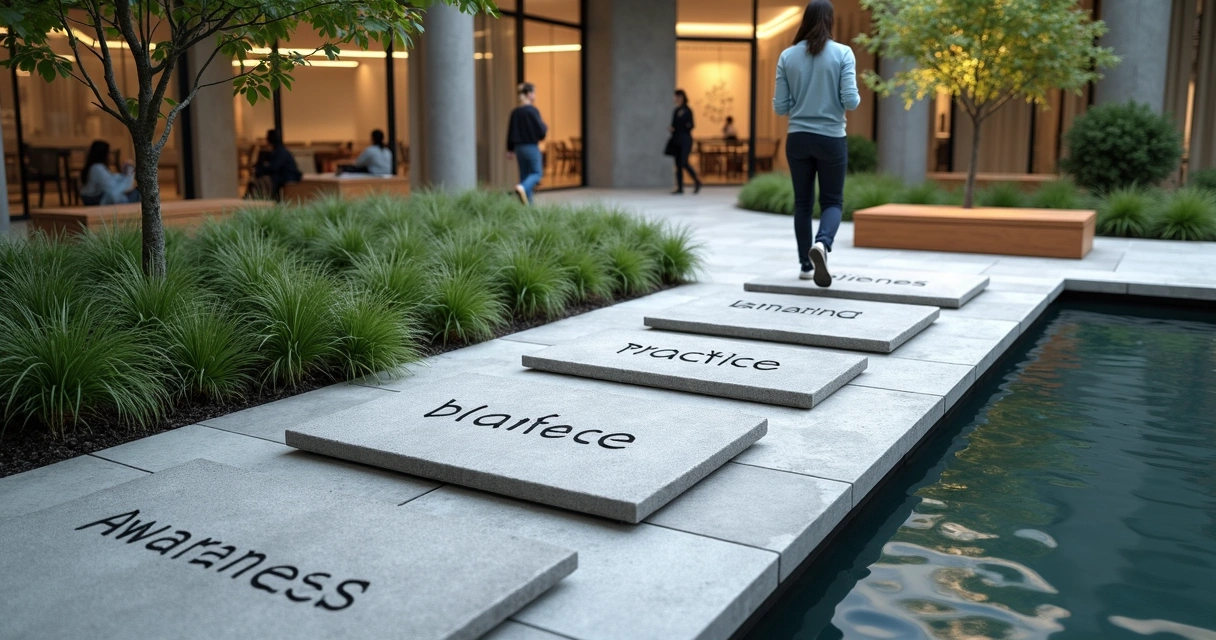
Organizations and people often talk about change, but making new habits stick in the workplace remains one of the real challenges of our time. We know from our observation and experience that simply wanting change is never enough. We see sustainable change emerge only when it is guided by awareness, purpose, and clear structure.
Our six-step model for sustainable behavioral change aims to address this reality, bringing together what we have learned from leadership, psychology, neuroscience, and contemporary workplace research. Throughout this article, we will walk together through each step with practical insights, examples, and perspectives so you can visualize real impact in daily professional life.
Why change doesn't stick
Most people at work have attempted personal or collective change at some point. Maybe it was a new way to address meetings, a recycling plan, or the commitment to deeper, more transparent conversations on the team. But as weeks pass, motivation fades and behaviors drift back to old patterns.
Studies like those by the National Bureau of Economic Research show the power—and also the fragility—of change. For example, a thoughtful social norms intervention recently led to dramatic improvements in plastic waste reduction and recycling in a global company. But these outcomes required aligned actions, active support, and regular monitoring.
Change feels easier at first—and grows more challenging when real life resumes.
To make change sustainable, we must treat behavior as the product of conscious choice, supportive environment, and consistent encouragement.
The six-step model for sustainable change
Here are the steps as we practice and recommend. With each step, we offer a blend of reason, clarity, and gentle challenge that makes transformation possible in everyday work life.
1. Awareness: pause and see clearly
We begin by slowing down enough to notice what is really going on. This might sound obvious, but many people skip the step of true awareness and jump straight to solutions. Before setting a new direction, we ask questions like:
- What is the current pattern of behavior?
- What are the emotional drivers and obstacles?
- Where do we feel most out of alignment?
Reflecting on these questions helps us anchor change in something honest. People only commit to what they truly see and feel.
2. Intention: set a conscious commitment
Once we are aware of what needs to change, clarity of intention is the foundation for action. This does not stop at saying "I want to recycle more" or "I will speak up in meetings". We look deeper:
- What specific behavior will signal this intention?
- How will this change serve individual and collective purposes?
Setting a conscious and well-defined intention aligns our thoughts, emotions, and future actions.
3. Structure: create small, visible actions
Real change happens in bite-sized steps. We build structure by defining clear, specific behaviors. For example, instead of a vague goal like "be a better communicator", we choose something measurable:
- Ask for feedback after every main presentation for three months
- Sort plastic and paper at the end of each shift
Structure sets the stage for action by reducing ambiguity and focusing effort on what can be done right now.

4. Environment: design supportive surroundings
Even with the best planning, our environments can work against us. At this stage, we consider:
- What physical cues can support the new behavior?
- How can colleagues encourage each other?
We rearrange spaces, add reminders, or introduce gentle nudges, like email notifications or friendly competitions. Creating an environment that prompts and rewards change can make all the difference.
5. Feedback: reflect and adjust
Change is rarely linear. We make space to look back, gather input, and celebrate what works while adjusting what does not. Feedback might come from self-tracking, peer input, or leader check-ins. Key questions include:
- What impact is this change having?
- Are there unhelpful side effects?
- Does something need to be tweaked?
Commitment to feedback increases self-awareness and makes the process a living, adapting journey—never a rigid plan.
6. Integration: repeat until automatic
The final stage is ongoing practice until the new behavior becomes second nature. This takes patience, reminders, shared stories, and support. Sometimes we pause, revisit earlier steps, and reconnect with why the change matters.
Integration may mean moving from individual action to a team-wide practice, such as making inclusive feedback part of every project debrief. Every time the new behavior is repeated with awareness, it leaves a mark that eventually shapes culture.

Stories that inspire
For us, change has come alive when individuals and teams found joy in small, visible improvements. We were moved by the story from the National Bureau of Economic Research study in which simple group reminders led to enormous reductions in waste and alarms. Seeing results multiplied by the regular act of noticing, correcting, and celebrating progress confirmed that collective effort and structure matter much more than intention alone.
The safest way to change a team is by changing a single habit—and then supporting each other, every day.
Making it real in your day-to-day
These steps do not require special meetings or complicated systems. In our experience, the most sustainable workplace changes happen when a few things come together:
- Clarity of purpose: We know what we are aiming for and why
- Visibility of action: People can notice and respond to each other's efforts
- Feedback loops: Adjustments are welcomed, not feared
We have seen teams go from recycling almost nothing to exceeding environmental goals, and groups that once avoided challenge now engage in more honest and healthy dialogue. Each time, the process looks much like the six-step model above.
Conclusion
Change that lasts at work is never accidental. We find it is grown, step by step, through a blend of awareness, intention, structure, supportive environments, ongoing feedback, and steady integration.
With each step, people build trust in the process, trust in each other, and, ultimately, trust in their own ability to reshape their future at work.
If you approach change in this way, the results are not just better outcomes, but a workplace where every person feels they have power to influence culture in a way that is positive, ethical, and enduring.
Frequently asked questions
What is the six-step change model?
The six-step change model is a method for turning desired workplace behaviors into habits that last. The model includes these stages: awareness, intention, structure, environment, feedback, and integration. Each step focuses on practical ways to spark, support, and secure new behaviors over time.
How to use the model at work?
Begin by pausing to notice what needs to change, then define a clear intention and create small, specific actions. Adjust your environment to reinforce new habits, seek feedback regularly, and keep repeating the behavior until it feels natural. Involving colleagues or your team increases success.
Why is sustainable change important?
Sustainable change is important because it leads to lasting improvements rather than short bursts of effort that quickly fade. In the workplace, this means better relationships, higher levels of trust, healthier cultures, and visible results that endure.
What are the benefits of this model?
The model benefits workplaces by creating clarity, focus, and cooperation. It helps groups and individuals identify what matters, build on small wins, and make modifications along the way. This supportive structure often sparks higher engagement and a culture people are proud to work in.
Is it hard to follow all six steps?
The steps require attention and patience but are not complicated. Most people and teams find that following them brings order and hope to what can seem like a messy process. The hardest part is often remembering to pause and revisit earlier stages as needed.